
Lab Notes
✶ February 25, 2026 ✶
An introduction into this site and future endeavors!
New Beginnings: The Witch-of-the-Woods Wears a Lab Coat
I hope this blog post finds you well and in good health. It's my great pleasure to welcome you to Spores and Sprigs - a destination for the mystical and the scientific to join unlikely hands.
Allow me to begin our journey by explaining what it is we're doing, exactly: experimentation, observations, and education. And just sprinkle of adventure, mystery, and inspiration, if I may be so bold.
The ultimate goal is to go out into the world to find samples of flora and fuana, the weird and the gross, the interesting and the obvious; bring them back to my lab and observe, note take, photograph, and explain (if possible)
With each week's post, I'll be writing the notes here, in the Lab Notes page, along with photos; but you may also find the same photos in the Herbarium page for a quicker glance. You will also find the Grimoire page, where I will be documenting the procedures completed to achieve the photos and experimental observations.
With all this said, please be aware that PPE (personal protective equipment) is always used, and is highly encouraged for anyone wanting to try these spellcrafts themselves. I use gloves, eye protection, and a lab coat as default PPE every time, and will increase protection as needed.
Experiments: Swift 380T Microscope
| Organism | Observations | Photos |
|---|---|---|
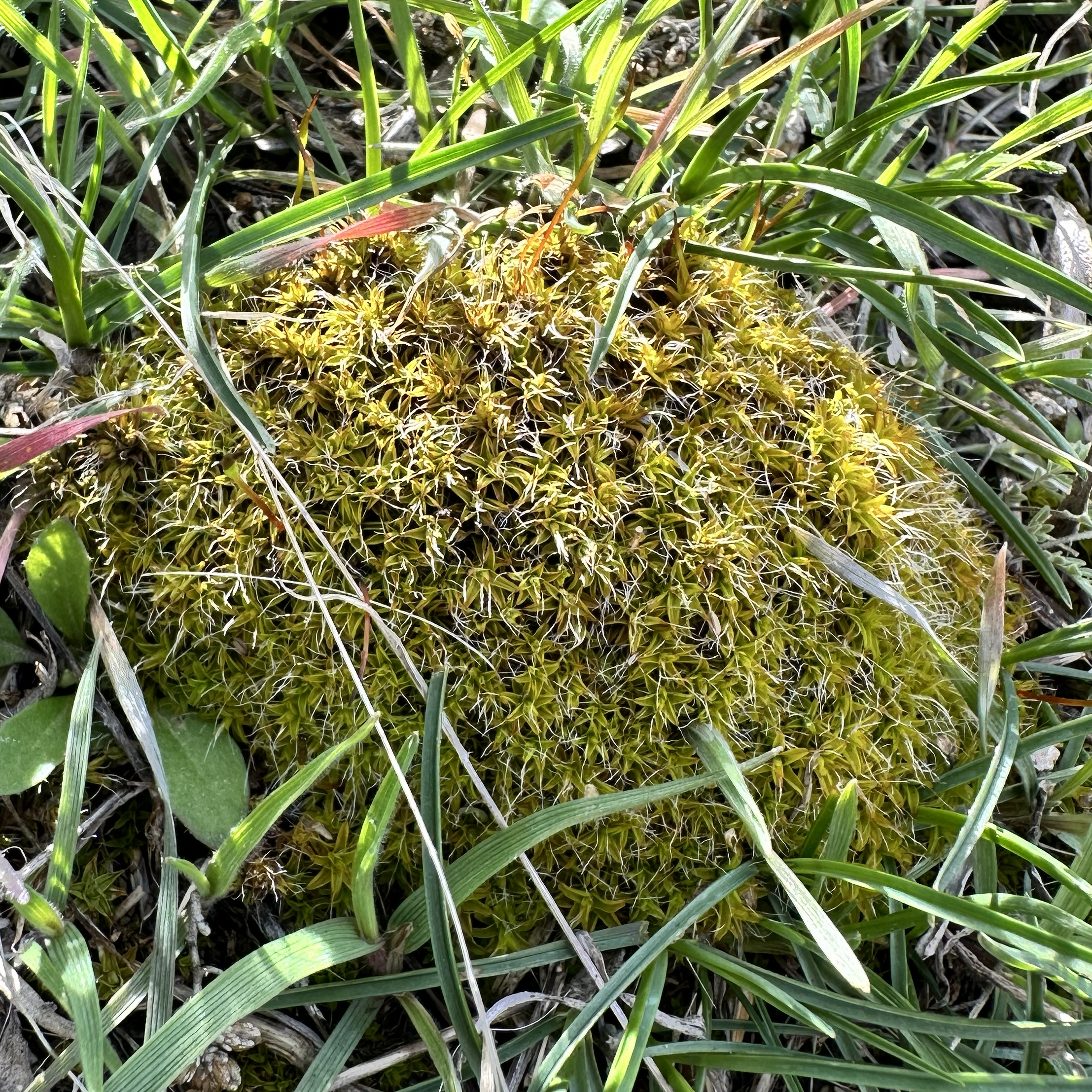
Star MossSyntrichia ruralis |
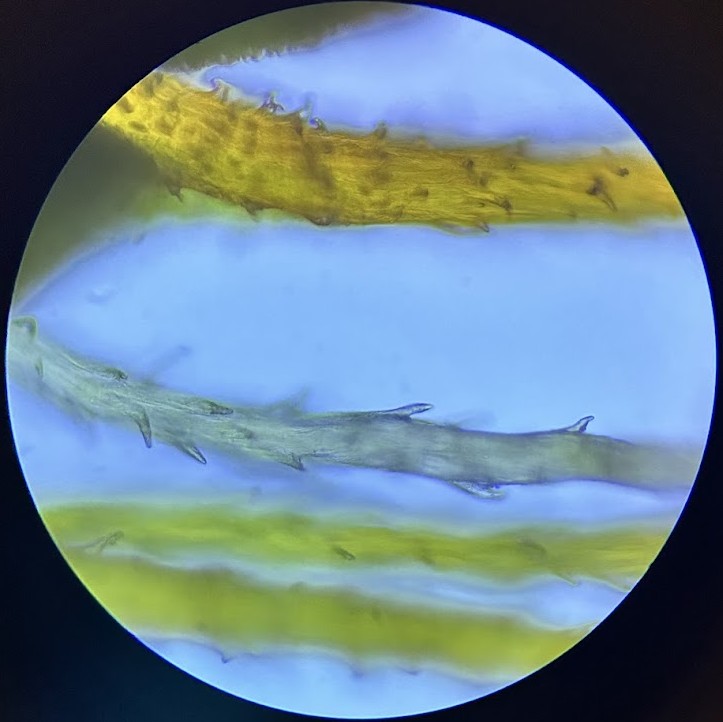
My first experiment was the humble Starmoss, due to it's adorable fuzziness (technical term) and it's thriving abundance in the park I was collecting from. I found that tearing off some sample bits was harder than intially thought because of how small each of the tendrils are. But, I perservered. The most fascinated part was seeing the "barbs" on the leaves, as it never crossed my mind that it would have something like this. I believe it to be a way for the moss to more firmly attach itself to surfaces, or a defense mechanism. After some research, it's more likely a way for the moss to capture and transport water. "Water Collection: In species like desert moss, the barbs on leaf awns act as nucleation sites where water droplets collect and are then transported down to the leaf surface." (nature.com) However, it's also a way for them to attach to surfaces, so I consider our hypthosis half right! Fun fact: Mosses don’t die off in winter. They have a natural anti-freeze which means they can tolerate very low temperatures, according to Woodland Trust. |
 |